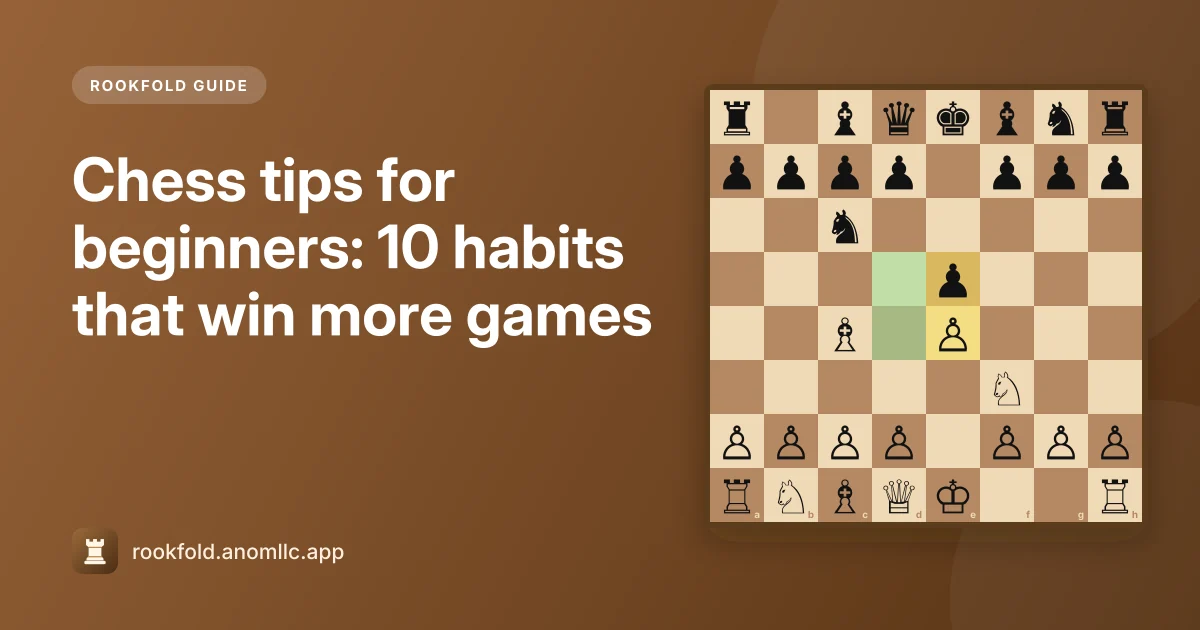
You don't need to memorize openings to win more chess games. Most beginner games are decided by a few simple habits: who brings their pieces out first, and who leaves a piece where it can be taken for free. These ten tips cover both.
In the opening
1. Control the center. The four squares e4, d4, e5 and d5 are the most valuable. Pawns and pieces there reach more of the board. A good first move is 1.e4 or 1.d4.
2. Develop your pieces. Bring knights and bishops out early, ideally one move each, before moving any piece twice. Knights usually belong on f3 and c3 (f6 and c6 for Black).
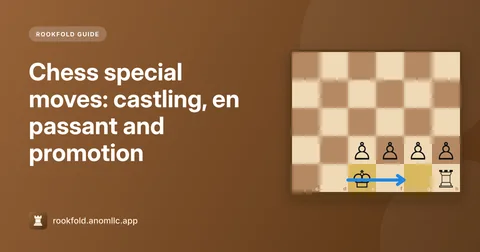
3. Castle early. Castling puts your king behind a wall of pawns and connects your rooks. Aim to castle within the first ten moves. The rules are in chess special moves.
4. Don't bring the queen out too early. She's easy to chase around with smaller pieces, which lets your opponent develop with tempo.
Every single move
5. Ask: what does my opponent want? Before you move, look at their last move. What does it attack? What does it threaten next move?
6. Check, capture, threat. Then look for your own forcing moves in that order: any checks, any captures, any threats. Strong moves are often among them.
7. Don't leave pieces hanging. Before you let go of a piece, make sure it's defended, or not attackable on its new square. Most beginner games are lost to a free piece, not a deep combination.
8. Count before you capture. When pieces trade, count attackers and defenders. Use rough values: pawn 1, knight 3, bishop 3, rook 5, queen 9.
Later in the game
9. Rooks belong on open files. A file with no pawns on it is a highway for a rook. Doubling rooks there is often strong.
10. In the endgame, use your king. With fewer pieces on the board, the king is safe to come forward and becomes a strong attacker and defender. Push passed pawns toward promotion.
Practise with Rookfold
- Start on Level 1 or 2: the computer makes human-like mistakes, so you can practise winning.
- Turn on Show possible moves (on by default) to see where a piece can go.
- Take back a move when you spot a blunder, and try to understand why it was one.
- Use Hint when you're unsure; it shows a strong move with an arrow. You get 3 per game, more with a short video.
- Move up a level when you start winning comfortably.
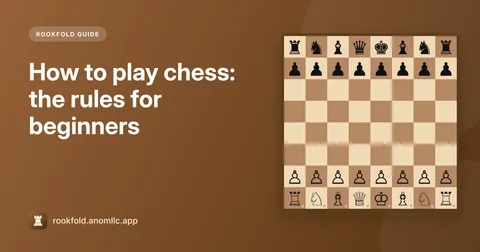
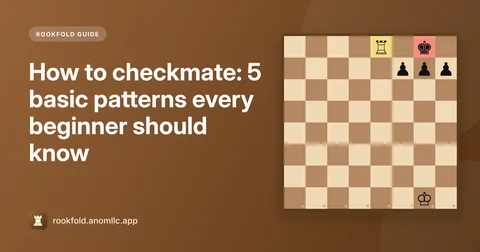
For the rules, see how to play chess, and to finish your games, learn how to checkmate.