Checkmate means the king is attacked and has no escape: it can't move to a safe square, the attacker can't be captured, and nothing can be put in between. Knowing a few standard patterns lets you finish games you're already winning. If you need the basics first, read how to play chess.
1. The back rank mate
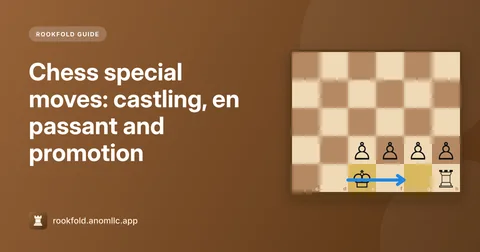
A king that has castled often sits behind its own three pawns. If an enemy rook or queen reaches that back rank, the king is trapped by its own pawns.
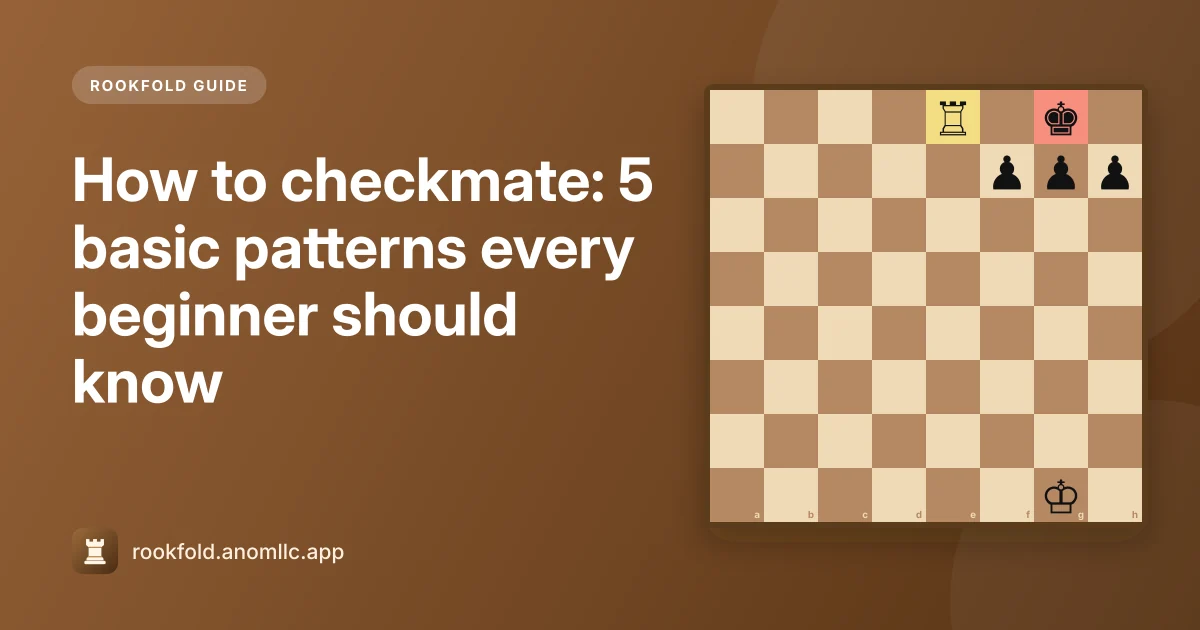
Example: Black king on g8, pawns on f7, g7, h7. A white rook lands on e8: checkmate, if nothing can capture it or block.
Lesson: give your own king an escape square ("luft") by moving one of those pawns one step, when you have a quiet moment.
2. The two-rook ladder
Two rooks (or a rook and a queen) can drive a king to the edge on their own:
- One rook cuts the king off along a rank (or file).
- The other rook gives check on the next rank, pushing the king back.
- Repeat, alternating rooks, until the king reaches the edge, and the last check is mate.
If the king comes close to a rook, move that rook far away along the same line and continue.
3. King and queen against king
The queen alone can't mate; she needs her king's help.
- Use the queen to box in the enemy king, staying a knight's move away from it to keep it in a shrinking box.
- When the king is on the edge, bring your king up to face it.
- Deliver mate with the queen on the edge, protected by your king.
Watch for stalemate: if the enemy king has no legal move and isn't in check, the game is a draw. Before each queen move near the edge, check that the king still has a square to go to.
4. King and rook against king
Slower, but always possible:
- Use the rook to cut the king off, so it's confined to part of the board.
- Bring your king up so the two kings face each other with one square between them ("opposition").
- Give check with the rook along the edge: the king can't step forward, and that's mate.
If the enemy king steps away from the opposition, make a waiting move with the rook along its line.
5. Mate with the queen next to the king
The most common mate in real games: your queen right next to the enemy king, protected by another of your pieces. The king can't take the queen (it's protected) and every square around is covered.
Practise against the computer
On Rookfold's lowest levels, the computer makes beginner mistakes, so you'll get plenty of winning positions to practise these patterns on. Use Hint if you can't see the finish: it shows a strong move with an arrow. For general habits that win more games, read chess tips for beginners.